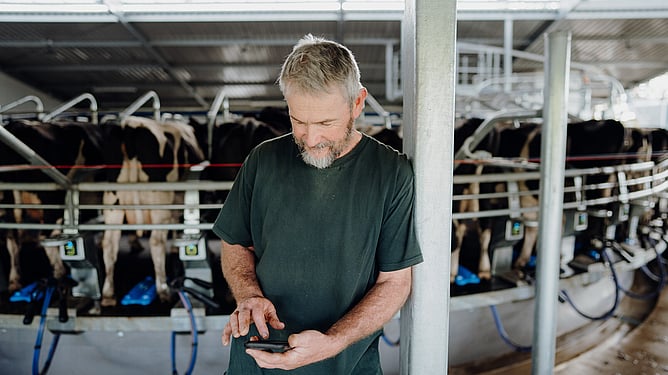
Every milk quality failure has a visible cost; the rejected load, and an invisible one: the lost trust, the compliance paperwork, the next season's supply contract.
It starts with a phone call no farmer wants to receive.
The tanker has rejected your load. The milk is over temperature, or the antibiotic screen came back positive, or the bacteria count is outside spec. Whatever the reason, the immediate consequence is clear: thousands of litres of milk going nowhere, and a bill for the disposal.
But the visible cost is only the beginning.
What a quality event actually costs
A single rejected load on a 400-cow farm represents roughly $3,000–$6,000 in lost milk revenue, depending on the season and farm system. That number is painful, but it's the number you can see on the invoice.
The costs you can't invoice are harder to quantify and often larger. Processors track quality events by supplier. A farm with a compliance history gets additional scrutiny. More frequent testing, tighter tolerances, and in some cases, review of the supply contract at season end. In a market where processor relationships take years to build, a single bad event can create friction that lasts far longer than the milk loss itself.
There's also the time cost. A quality event triggers a chain of investigation: records to pull, staff to interview, equipment to check. For a farm manager, that's half a day or more. For a processor's technical team, it's a formal audit. Neither party wants to be doing this work.
Most quality events are preventable and detectable
The frustrating truth about milk quality failures is that most of them don't happen suddenly. Temperature excursions, agitation failures, and CIP cycle gaps all leave a trail of data before they become a problem.
A vat that's struggling to hold temperature on a warm evening will show a gradual drift, not a sudden spike, in the hour before the milk drops out of spec. An agitator that's running intermittently will create patterns in the data that an experienced eye (or a well-configured alert) would catch before the tanker arrives.
The problem is that most farms have no way of seeing that data in real time. The first indication that something went wrong is the rejected load itself.
Agora changes that. Our telemetry system monitors your vat continuously; temperature, agitation, and CIP cycles, and sends alerts directly to your phone the moment something moves outside the expected range. Not the next morning. Not when the tanker driver calls. In time to do something about it.
But real-time visibility is only part of the picture. Every data point Agora captures is logged and stored, giving you a complete audit history of your vat's performance across the entire season. That record matters more than most farmers realise - until they need it.
When a processor queries a load, or an unexpected result comes back from the lab, the instinct is to try to reconstruct what happened from memory. With Agora, you don't have to. You can pull up the exact temperature curve for any milking, confirm when the agitator ran, and show precisely when the CIP cycle completed; timestamped, accurate, and ready to share. That's the difference between defending your milk quality with paperwork and defending it with data.
For many Agora users, the audit history becomes as valuable as the alerts themselves. It's the evidence that due diligence was done, shift after shift, season after season, even when no one was watching.
That's what peace of mind looks like on a working dairy farm. Not hoping nothing went wrong. Knowing.
What real-time monitoring changes
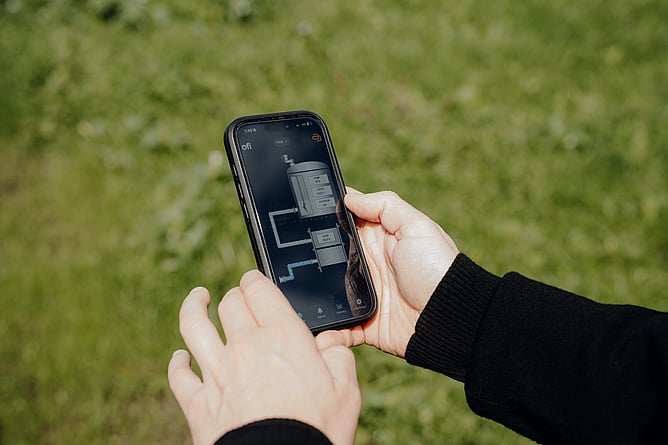
Agora's vat telemetry system monitors temperature and agitation continuously, sending data to the Agora dashboard every few minutes. If a vat temperature starts drifting outside its safe band, the farmer receives an alert on their phone, before the problem becomes a rejection.
That sounds simple. In practice, it changes the entire economics of quality management on a dairy farm.
In Agora's first commercial season, connected farms detected and resolved temperature events before they resulted in a rejection in the majority of cases where an alert was triggered. The alert came through. The farmer investigated. The issue; a refrigeration unit that had lost pressure, a door left ajar on a warm night, was fixed before the tanker arrived.
One avoided rejection pays for the monitoring system many times over. But the real value is compounding: a farm with a clean quality record maintains its processor relationship, avoids the audit overhead, and enters each new season without historical baggage.
The processor perspective
Processors don't talk about this often, but supply chain confidence is worth a significant premium to them. A processor collecting from 500 farms would rather collect from 500 farms they trust than 500 farms they're monitoring nervously.
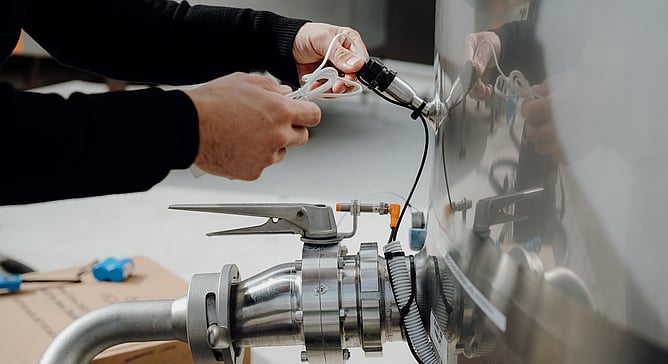
Real-time telemetry data, available to processors as part of Agora's platform, gives supply chain managers visibility they've never had before. Instead of finding out about a quality event when the tanker returns to the plant, a processor can see a developing temperature excursion and make a routing or collection decision in real time.
That's not a marginal improvement. For processors managing tight logistics and quality commitments to export customers, it's a meaningful reduction in supply chain risk.
Starting with the vat
The vat is the single highest-risk point for milk quality between milking and collection. It's where the milk spends the most time, where temperature and agitation matter most, and where a failure has the least recovery time before the tanker arrives.
It's also the most logical place to start building a data layer on a dairy farm, a single sensor installation, no wiring required, connected to a platform that works on any phone.
If you're a processor, the question is simple: how much of your supply base can you currently see in real time? If you're a farmer, the question is equally simple: do you know what your vat is doing at 2am on a hot December night?